The sections of a marching band, explained: brass, woodwinds, percussion and color guard
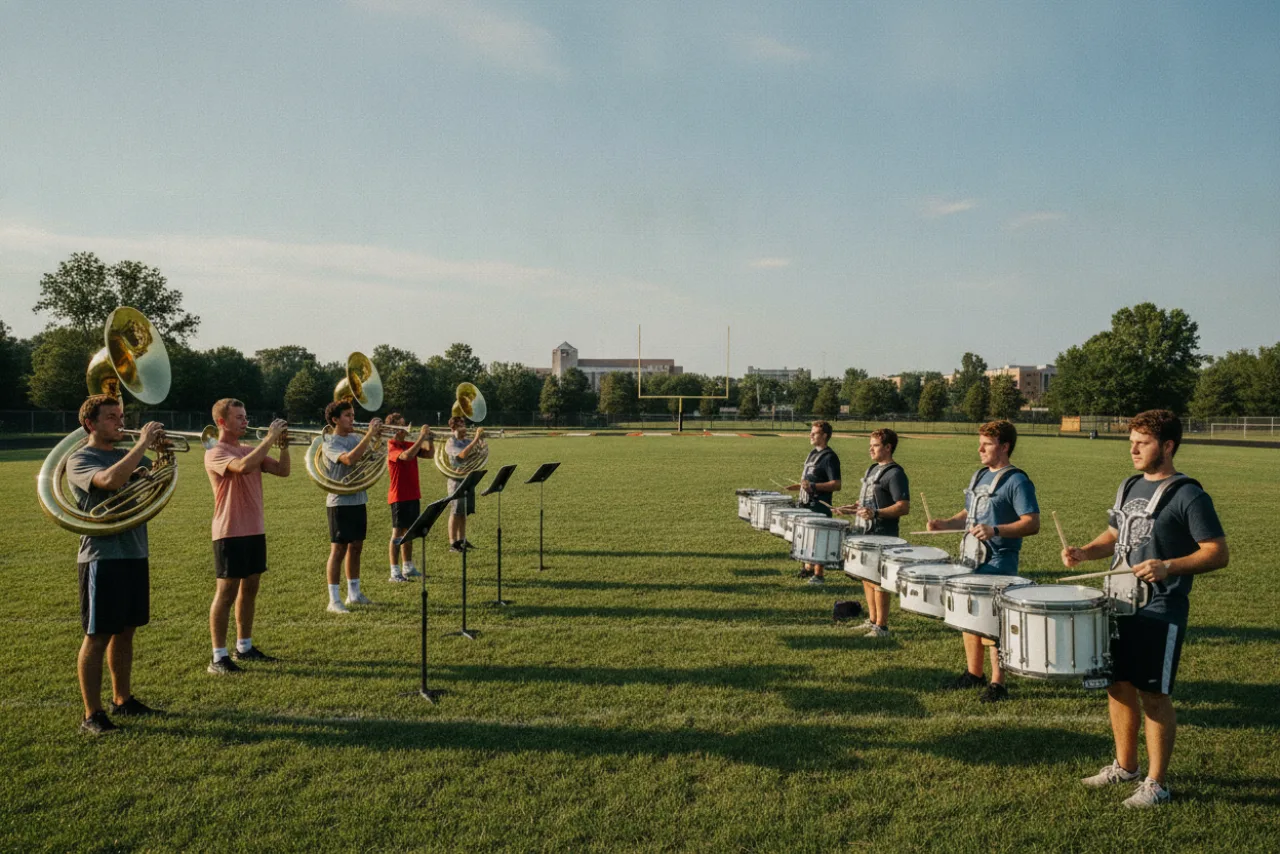
Every marching band is built from the same four families of performers. Understanding what each section does is the key to understanding the whole ensemble.
Brass: the power of the band
The brass line is built to project. Trumpets carry the melody and the highest impact lines; mellophones fill the crucial middle voice that gives the band its full sound; baritones add weight and counter-melodies; and sousaphones wrap the whole ensemble around a deep, portable bass. Because brass cuts through outdoors better than any other section, arrangers build the loudest, most dramatic moments of a field show around it.
Woodwinds: color and agility
Flutes, clarinets and saxophones bring speed, color and detail that brass cannot easily produce. They handle fast runs, shimmering high lines and delicate textures, and they reward careful tuning and blend. A disciplined woodwind section is often the difference between a band that is merely loud and one that sounds genuinely polished.
Percussion: the heartbeat
Percussion splits into two parts. The battery — snares, tenors (quads) and bass drums — marches with the band and keeps everyone locked to a single pulse, no small task while moving in formation. The front ensemble, or pit, stays on the sideline with marimbas, vibraphones, timpani and auxiliary instruments, adding harmony and effects. Between them, percussion is the timekeeper the entire ensemble depends on.
Color guard: the visual voice
The color guard performs the show visually, using flags, rifles, sabres and dance to interpret the music. They expand the picture beyond the players, carry the visual theme of the program, and are usually the first thing an audience watches. A strong guard turns a musical performance into a piece of theatre.
The drum major: one ensemble, one tempo
Tying it all together is the drum major, who conducts the band, sets and holds the tempo, and acts as the leader on and off the field. When dozens of players are spread across a hundred yards, the drum major is the single reference point that keeps the regiment together.