A short history of marching bands: from military music to the modern field show
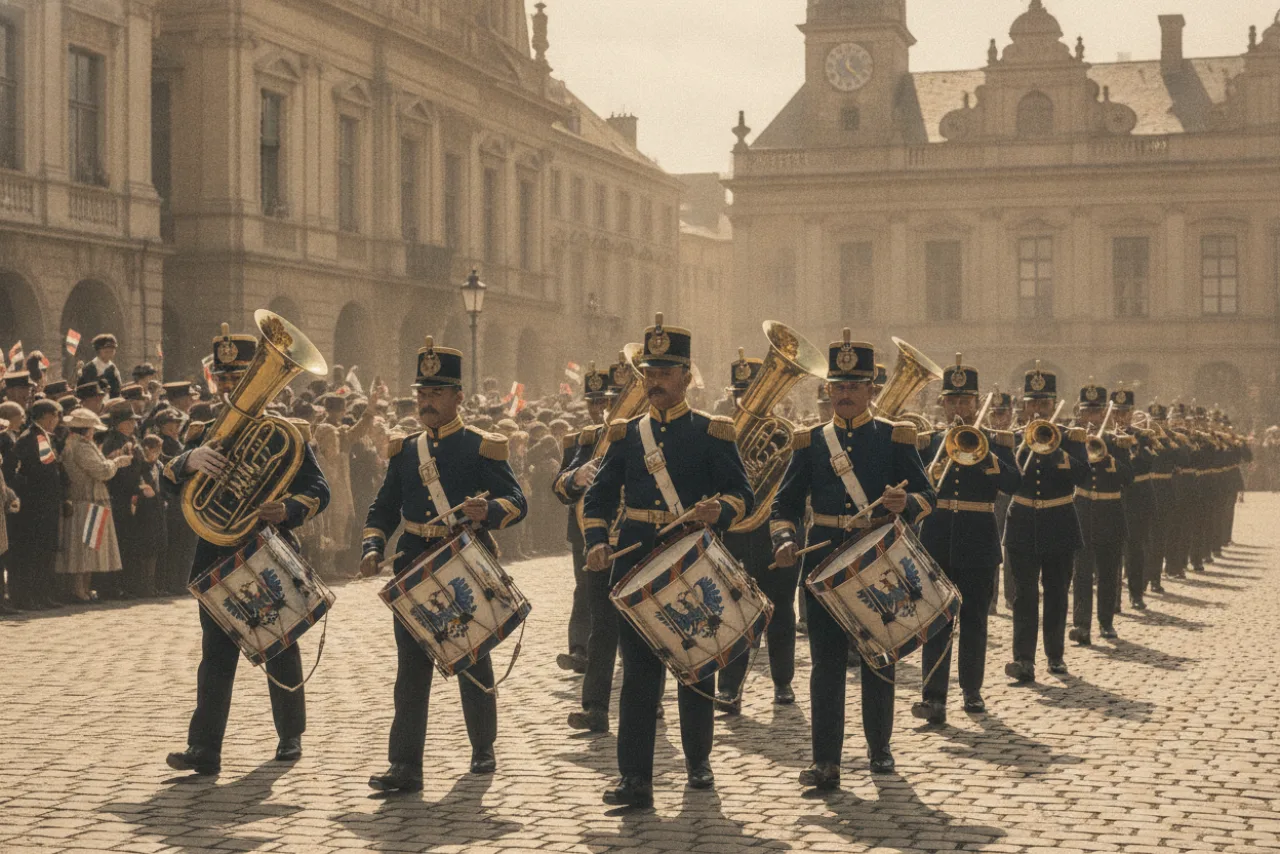
Marching bands grew out of military and ceremonial music and became one of the most recognisable musical traditions in the world. Here is how that story unfolded.
Military and ceremonial roots
The marching band traces directly back to military music. For centuries, armies used fifes, drums and brass to keep troops in step, signal manoeuvres on the battlefield, and add ceremony to parades and reviews. The instrumentation that still defines the activity — loud, portable brass and percussion that carries in the open air — was shaped by those practical battlefield needs long before it was used for entertainment.
From the barracks to the bandstand
As military bands grew in skill through the eighteenth and nineteenth centuries, they began performing for the public at ceremonies, concerts and civic events. Composers wrote marches specifically for them, and the bandstand became a fixture of town life. This is the period when the marching band stopped being purely functional and became a musical tradition in its own right, admired for precision and showmanship.
The scholastic and competitive era
In the twentieth century the activity took root in schools and communities, especially in the United States, where marching bands became part of sporting and civic culture. Halftime shows, parades and competitions pushed bands to combine music with increasingly sophisticated drill. The modern competitive field show — with its memorised formations, layered visual themes and judged scoring — is the direct descendant of that scholastic tradition.
What carried through
Across all those eras, the core stayed the same: a group of musicians performing together while moving, held to a standard of precision inherited from military discipline. That continuity is why a marching band today still feels like a regiment — organised, accountable and built to move as one. It is also why we chose the name we did.